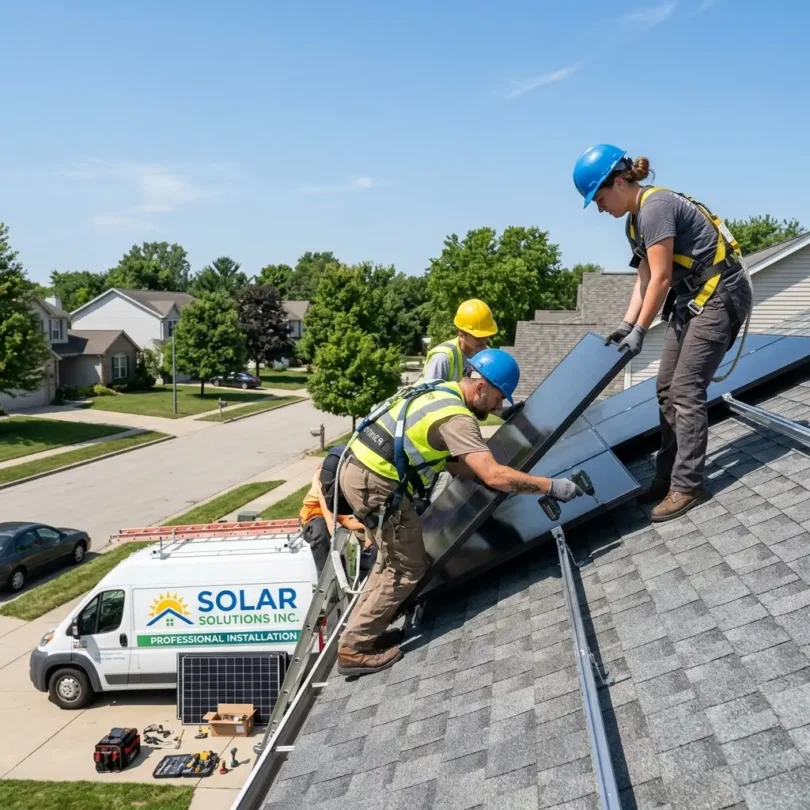

Solar panels are one of the biggest energy upgrades a homeowner can make. A good solar system can reduce electricity bills, protect against rising utility costs, increase home energy independence, and lower long-term energy expenses.
But solar is not a simple purchase.
A homeowner is not only buying panels. They are buying system design, permits, installation labor, inverter equipment, roof attachments, monitoring, utility approval, warranties, financing, service support, and sometimes battery backup. The installer matters just as much as the panels.
That is why choosing the right solar panel installation company is important.
The best solar panel companies for homes help homeowners design the right system, estimate energy savings, compare equipment, understand incentives, choose financing, install safely, and support the system after installation.
In 2026, solar panel cost can vary widely. EnergySage says the average cost of a 12 kW solar panel installation on its marketplace is about $30,505 before incentives, and homeowners can save anywhere from $37,000 to $148,000 over 25 years depending on location, energy rates, and system performance.
This guide compares the best solar panel installation companies for homes, explains what to look for in a solar installer, and helps homeowners avoid expensive mistakes.
What Is a Solar Panel Installation Company?
A solar panel installation company designs and installs solar energy systems for homes.
A full-service solar installer may handle:
- Home energy usage review
- Roof inspection
- Solar system design
- Panel selection
- Inverter selection
- Battery backup options
- Permit applications
- Utility interconnection
- Solar panel installation
- Electrical work
- Inspection scheduling
- System activation
- Monitoring setup
- Warranty support
- Maintenance guidance
- Financing options
Some solar companies install their own systems. Others sell solar systems and use subcontractors for installation. Some companies focus on cash and loan purchases, while others offer leases or power purchase agreements.
The best solar company is not always the cheapest. A poor installation can cause roof issues, underperformance, warranty problems, and service headaches.
How Much Do Solar Panels Cost in 2026?
Solar panel installation cost depends on system size, location, roof type, equipment quality, battery storage, labor rates, utility rules, and incentives.
General cost ranges:
| Solar Project Type | Estimated Cost Before Incentives |
|---|---|
| Small 5 kW system | $12,000–$18,000 |
| Medium 8 kW system | $18,000–$28,000 |
| Large 10 kW system | $24,000–$35,000 |
| 12 kW system | $28,000–$40,000 |
| Solar with battery backup | $35,000–$60,000+ |
| Premium solar roof system | $50,000+ |
EnergySage reports that a 10 kW solar panel system costs about $25,400 based on real marketplace quotes from 2025 data, while a 12 kW installation averages about $30,505 before incentives.
SolarReviews lists the average home solar panel installation cost at about $21,816, with an average cost per watt of $3.03.
Your final cost may be lower or higher depending on your state, utility rates, roof layout, installer, and financing method.
Federal Solar Tax Credit Update
For U.S. homeowners, the federal Residential Clean Energy Credit has been a major incentive. The IRS states that the Residential Clean Energy Credit equals 30% of the costs of new qualified clean energy property installed from 2022 through December 31, 2025, and that the credit is not available for property placed in service after that date.
This is important: homeowners should verify current tax-credit status with the IRS, a tax professional, or official government sources before buying solar. Tax rules can change, and eligibility depends on timing, ownership, property type, and tax situation.
Best Solar Panel Installation Companies for Homes
Below are some of the best solar panel companies homeowners commonly compare. Availability varies by location, so always check whether the company serves your area.
1. Sunrun
Best for: Solar leases, power purchase agreements, and battery options
Good for: Homeowners who want lower upfront cost options
Main strength: Large residential solar provider with financing flexibility
Sunrun is one of the largest residential solar companies in the United States. It is well known for solar leases, power purchase agreements, solar loans, battery storage, and home solar service plans.
Key Features
- Solar panel installation
- Solar leases
- Power purchase agreements
- Solar loans
- Battery storage options
- System monitoring
- Maintenance options
- Roof and energy review
- Home energy consultation
- Long-term service plans
Why Sunrun Is Good
Sunrun is a strong option for homeowners who want solar without paying the full system cost upfront. Its lease and PPA options can make solar more accessible for homeowners who care more about monthly energy savings than owning the system directly.
Sunrun also offers battery backup options, which can be valuable in areas with power outages, time-of-use electricity rates, or weak grid reliability.
Best Fit
Sunrun is best for homeowners who want flexible financing, solar leases, PPAs, and battery backup options.
Possible Downsides
Leases and PPAs usually provide less long-term financial benefit than owning the system. Homeowners should compare total lifetime savings, contract terms, escalators, transfer rules, and buyout options.
2. Tesla Solar
Best for: Solar panels, Powerwall battery, and Tesla ecosystem
Good for: Battery backup, sleek equipment, tech-focused homeowners
Main strength: Solar panels plus Tesla Powerwall integration
Tesla Solar is one of the most recognized names in residential solar because of its brand, solar panels, Solar Roof, and Powerwall battery.
Key Features
- Solar panel installation
- Tesla Powerwall battery
- Solar Roof option in some areas
- Mobile app monitoring
- Clean equipment design
- Online estimate process
- Battery backup
- Energy storage integration
- EV and home energy ecosystem
Why Tesla Solar Is Good
Tesla is especially attractive for homeowners who want solar panels and battery storage in one ecosystem. Tesla Powerwall is one of the best-known home battery products and can be useful for backup power and energy management.
Tesla Solar may also appeal to homeowners who already own a Tesla EV or want a simple app-based energy system.
Best Fit
Tesla Solar is best for homeowners who want solar plus battery backup and prefer the Tesla energy ecosystem.
Possible Downsides
Customer service and installation timelines can vary by region. Homeowners should read local reviews and compare Tesla quotes with local installers.
3. Palmetto Solar
Best for: Customer support and solar protection plans
Good for: Homeowners who want monitoring, service support, and guided solar buying
Main strength: Solar service model and homeowner support
Palmetto Solar is a residential solar company that offers solar installation, monitoring, service, and protection plans. It is often compared as a customer-service-focused solar provider.
Key Features
- Solar panel installation
- Solar design
- Financing options
- Monitoring
- Solar service plans
- System protection options
- Battery options in some areas
- Maintenance support
- Energy savings estimates
- Homeowner support tools
Why Palmetto Solar Is Good
Palmetto can be a good option for homeowners who want more support after installation. Solar is a long-term home upgrade, so monitoring, service, and customer support matter.
A solar system may run for 25 years or more. Choosing a company with ongoing service options can be useful if something goes wrong later.
Best Fit
Palmetto Solar is best for homeowners who want guided solar installation and ongoing service support.
Possible Downsides
Availability and plan options may vary by state. Homeowners should compare service plans and warranty details before signing.
4. Freedom Solar Power
Best for: Premium equipment and SunPower-style installation quality
Good for: Homeowners wanting high-quality panels and strong local service in served markets
Main strength: Premium residential solar installation
Freedom Solar Power is a residential and commercial solar installer operating in select markets. It is often associated with premium solar equipment and high-quality installation.
Key Features
- Residential solar installation
- Premium panel options
- Battery storage
- EV charger options
- System design
- Monitoring
- Local installation teams
- Roofing-related coordination in some cases
- Financing options
- Maintenance and service
Why Freedom Solar Power Is Good
Freedom Solar may be a good choice for homeowners who want a more premium installation experience and strong equipment options. The quality of solar installation is very important because roof attachments, wiring, inverter setup, and system design affect long-term performance.
Best Fit
Freedom Solar Power is best for homeowners in served areas who want premium equipment and installer quality.
Possible Downsides
It is not available everywhere. Homeowners outside its service area will need another installer.
5. Momentum Solar
Best for: Guided solar buying experience
Good for: Homeowners who want help through design, permitting, and installation
Main strength: Full-service solar process
Momentum Solar is a residential solar installer that provides consultation, design, financing, permitting, installation, and activation support.
Key Features
- Solar panel installation
- Solar consultation
- Custom system design
- Financing options
- Permitting support
- Utility interconnection support
- Monitoring
- Battery options in some areas
- Customer support
Why Momentum Solar Is Good
Momentum Solar may be useful for homeowners who want a guided process from quote to installation. The solar buying process includes many steps, and a full-service installer can reduce confusion.
Best Fit
Momentum Solar is best for homeowners who want a full-service solar installation process and help with permits and utility approval.
Possible Downsides
Service areas are limited. Customer reviews can vary by region, so check local feedback before choosing.
6. Blue Raven Solar
Best for: Solar loan options and residential installations
Good for: Homeowners who want ownership through financing
Main strength: Residential solar financing and installation
Blue Raven Solar is a residential solar company known for solar installation and financing options. It serves selected states and focuses on homeowners who want to own solar panels through financing.
Key Features
- Solar panel installation
- Solar loans
- Custom system design
- Permit support
- Utility approval support
- Monitoring
- Home energy consultation
- Residential solar financing
Why Blue Raven Solar Is Good
Blue Raven Solar can be a good fit for homeowners who want to own their solar system but prefer financing instead of paying cash upfront.
Owning a system usually allows homeowners to benefit more from incentives and long-term energy savings compared with leases or PPAs, but the best choice depends on personal finances.
Best Fit
Blue Raven Solar is best for homeowners who want solar ownership through loan financing.
Possible Downsides
It is not available nationwide. Homeowners should compare loan terms, interest rates, dealer fees, and total system cost.
7. ADT Solar / Local Successor Options
Best for: Homeowners comparing major-brand solar availability
Good for: Homeowners who want a known brand, where service is available
Main strength: Brand recognition and prior residential solar market presence
ADT Solar was previously one of the bigger names in residential solar, but homeowners should verify current availability and local service options before considering any ADT-branded solar offering. The residential solar market changes often, and companies can exit markets, sell assets, or change operations.
Key Features to Check
- Whether service is available in your area
- Current ownership or brand status
- Warranty support
- Installer responsibility
- Service coverage
- Customer support
- Battery options
- Financing terms
Why This Matters
Solar is a long-term investment. Homeowners should confirm whether a company is actively installing and servicing systems in their state before signing a contract.
Best Fit
Major-brand solar options can be useful where active service, warranty support, and local installation quality are confirmed.
Possible Downsides
Do not rely on brand name alone. Verify current service availability, warranty responsibility, and customer reviews.
8. EnergySage Marketplace
Best for: Comparing multiple solar quotes
Good for: Homeowners who want quote comparison and installer choice
Main strength: Marketplace approach with pre-screened installers
EnergySage is not a solar installer itself. It is a solar marketplace that helps homeowners compare quotes from pre-screened installers.
EnergySage describes itself as a trusted solar marketplace that connects homeowners with pre-screened, certified installers to compare quotes and financing options.
Key Features
- Multiple solar quotes
- Installer comparison
- Equipment comparison
- Cost-per-watt comparison
- Financing comparison
- Solar calculator tools
- Battery comparison
- Educational resources
- Local installer access
Why EnergySage Is Good
EnergySage is useful because comparing multiple quotes can save money and help homeowners understand the market. Solar quotes can vary widely for the same home.
A marketplace lets homeowners compare:
- Price per watt
- Panel brand
- Inverter brand
- Battery options
- Warranty
- Installer reviews
- Financing terms
- System size
- Estimated production
Best Fit
EnergySage is best for homeowners who want to compare multiple local solar installers before choosing.
Possible Downsides
Since EnergySage is a marketplace, the installation quality depends on the installer you choose.
9. Local Solar Installers
Best for: Personalized service and local expertise
Good for: Homeowners who want local accountability
Main strength: Local permitting, utility, roof, and climate knowledge
Local solar installers can be some of the best choices for homeowners. A strong local installer may understand your utility rules, permit process, roof types, weather patterns, local incentives, and inspection requirements better than a national company.
Key Features
- Local installation team
- Local permitting knowledge
- Local utility interconnection experience
- Personalized service
- Strong regional reviews
- Flexible equipment options
- Local maintenance support
- Custom system design
- Local references
Why Local Installers Are Good
Solar is highly local. Incentives, net metering, utility rates, permitting, inspection timelines, and roof conditions vary by area.
A good local installer may offer better communication, faster service, and stronger accountability than a large national sales company.
Best Fit
Local solar installers are best for homeowners who value personalized service, local expertise, and direct installer accountability.
Possible Downsides
Not every local installer is good. Check licensing, insurance, reviews, warranties, installation history, and equipment quality.
10. Regional Utility or Co-op Solar Programs
Best for: Homeowners who want trusted local solar options
Good for: Community solar, group-buy programs, utility partnerships
Main strength: Local program support and possible savings
Some homeowners can access solar through utility programs, solar co-ops, community solar, or group-buy programs.
Key Features
- Group pricing
- Local program support
- Community solar options
- Utility coordination
- Pre-selected installers
- Educational workshops
- Local incentive guidance
- Shared solar options for renters in some cases
Why Solar Co-ops and Programs Are Good
A solar co-op or utility-supported program may help homeowners get better pricing, understand incentives, and compare trusted installers.
Community solar can also be useful for homeowners who cannot install panels because of roof shading, roof age, rental status, or HOA restrictions.
Best Fit
Solar co-ops and local programs are best for homeowners who want local guidance or cannot install rooftop solar directly.
Possible Downsides
Program availability varies by city, state, utility, and country.
Quick Comparison Table
| Solar Option | Best For | Main Strength | Best Homeowner Type |
|---|---|---|---|
| Sunrun | Leases and PPAs | Flexible financing and battery options | Lower upfront cost shoppers |
| Tesla Solar | Solar + battery | Powerwall ecosystem | Tech-focused homeowners |
| Palmetto Solar | Service support | Monitoring and protection plans | Homeowners wanting support |
| Freedom Solar Power | Premium install | High-quality equipment and service | Premium solar buyers |
| Momentum Solar | Guided process | Full-service installation | Homeowners wanting handholding |
| Blue Raven Solar | Solar loans | Ownership through financing | Loan-focused buyers |
| ADT/local successor options | Major-brand comparison | Brand familiarity where active | Availability-dependent buyers |
| EnergySage Marketplace | Quote comparison | Multiple installer quotes | Comparison shoppers |
| Local installers | Local service | Local permitting and utility expertise | Homeowners wanting accountability |
| Solar co-ops/programs | Local programs | Group buying and education | Budget/local program shoppers |
What to Look for in a Solar Panel Company
Choosing a solar company requires more than checking price.
1. Licensing and Insurance
The installer should be licensed and insured for electrical and roofing-related work where required.
2. Solar Experience
Ask how many systems the company has installed in your area.
3. Equipment Quality
Compare panel brands, inverter brands, mounting systems, and battery options.
4. Workmanship Warranty
A good workmanship warranty protects against installation problems.
5. Panel Warranty
Many solar panels have long performance warranties, often around 25 years, but terms vary by manufacturer.
6. Inverter Warranty
Inverters may have shorter warranties than panels. Ask what is covered.
7. Roof Condition
A good installer should inspect your roof before installing panels. If your roof is near the end of its life, consider replacing the roof first.
8. Production Estimate
Ask how much electricity the system is expected to produce each year.
9. Financing Terms
Compare cash, loan, lease, and PPA options carefully.
10. Customer Reviews
Read local reviews, not only national ratings.
11. Service Support
Ask who handles warranty claims, system monitoring, repairs, and troubleshooting.
12. Transparent Quote
The quote should clearly show system size, equipment, cost per watt, incentives, financing, and warranty terms.
Solar Panel Company vs Solar Marketplace
A solar company installs or sells solar systems. A solar marketplace helps homeowners compare multiple installers.
Solar Company
A solar company may provide:
- Sales consultation
- System design
- Installation
- Financing
- Battery options
- Monitoring
- Warranty support
Solar Marketplace
A marketplace may provide:
- Multiple installer quotes
- Price comparison
- Equipment comparison
- Installer reviews
- Educational resources
A marketplace can be useful before signing with any company because it gives you more pricing context.
Solar Financing Options
Homeowners usually choose one of four solar financing methods.
Cash Purchase
You pay upfront and own the system.
Pros:
- Highest long-term savings
- No loan interest
- Usually easiest incentive ownership
- No monthly solar payment
Cons:
- High upfront cost
Solar Loan
You finance the system and own it.
Pros:
- Lower upfront cost
- Ownership benefits
- Possible tax incentive eligibility
- Long-term savings after payoff
Cons:
- Interest costs
- Monthly payments
- Dealer fees may increase price
Solar Lease
A company owns the system, and you pay a monthly lease.
Pros:
- Lower upfront cost
- Maintenance may be included
- Easier entry for some homeowners
Cons:
- Lower lifetime savings
- Contract transfer issues when selling
- Tax credits usually go to system owner
Power Purchase Agreement
A company owns the system, and you pay for the electricity it produces.
Pros:
- Low upfront cost
- Can reduce electric bills
Cons:
- Long contract
- Escalator clauses may increase rates
- Less financial benefit than ownership
Solar Panels With Battery Backup
Battery backup is becoming more popular because it can store solar energy and provide backup power during outages.
Battery storage can help with:
- Power outages
- Time-of-use rates
- Backup for critical loads
- Energy independence
- Using more solar energy at night
- Reducing grid dependence
Common battery options include Tesla Powerwall, Enphase batteries, FranklinWH, Generac, SolarEdge, and other systems.
Battery backup increases total cost. A solar-plus-battery system can cost much more than solar panels alone. Homeowners should decide whether backup power is worth the extra investment.
Is Solar Worth It for Homeowners?
Solar may be worth it if:
- Your electric bills are high
- Your roof gets strong sun exposure
- Your roof is in good condition
- Your utility rates are rising
- Net metering or export credits are available
- Local incentives exist
- You plan to stay in the home
- You choose a fair-priced system
- You can use available tax credits or rebates
- Financing terms are reasonable
Solar may not be worth it if:
- Your roof is heavily shaded
- Your roof needs replacement soon
- Your electric bills are low
- Your utility has poor solar buyback rules
- You plan to move soon
- The quote is overpriced
- Financing has high fees
- Your HOA or local rules create problems
EnergySage says solar panels typically last 25 to 30 years, and state/local incentives can significantly lower costs for some homeowners.
Questions to Ask a Solar Installer
Before signing a solar contract, ask:
- Are you licensed and insured?
- Do you use subcontractors?
- How many systems have you installed locally?
- What panels do you recommend and why?
- What inverter is included?
- Is battery backup included or optional?
- What is the system size in kW?
- What is the cost per watt?
- What is the estimated annual production?
- What happens if production is lower than estimated?
- Is roof work needed first?
- Who handles permits?
- Who handles utility approval?
- What warranties are included?
- What happens if I sell my home?
- Are there loan dealer fees?
- Are there escalator clauses?
- Who services the system after installation?
A trustworthy solar installer should answer clearly and provide a detailed written proposal.
Common Solar Buying Mistakes
Mistake 1: Choosing Only the Lowest Monthly Payment
A low monthly payment can hide a long loan, high dealer fees, or lower lifetime savings.
Mistake 2: Not Comparing Cost Per Watt
Cost per watt helps compare quotes with different system sizes.
Mistake 3: Ignoring Roof Condition
If the roof needs replacement soon, install a new roof before solar.
Mistake 4: Not Reading Financing Terms
Solar loans, leases, and PPAs can have very different long-term costs.
Mistake 5: Assuming Tax Credits Are Guaranteed
Tax-credit eligibility depends on law, timing, ownership, and personal tax situation.
Mistake 6: Not Checking Local Reviews
National ratings are useful, but local installer performance matters more.
Mistake 7: Overestimating Savings
Savings depend on utility rates, system production, shading, net metering, and energy use.
Mistake 8: Signing Too Fast
High-pressure solar sales can lead to bad decisions. Take time to compare.
Final Verdict: What Is the Best Solar Panel Company?
The best solar panel installation company depends on your location, budget, roof, energy use, financing preference, and service expectations.
For most homeowners:
- Best for leases and PPAs: Sunrun
- Best for solar plus battery ecosystem: Tesla Solar
- Best for service support: Palmetto Solar
- Best premium local installation in served areas: Freedom Solar Power
- Best guided solar process: Momentum Solar
- Best solar loan-focused option: Blue Raven Solar
- Best for comparing quotes: EnergySage Marketplace
- Best for local expertise: Strong local solar installers
- Best for local program guidance: Solar co-ops and utility programs
If you want the best deal, compare at least three solar quotes. Look at cost per watt, equipment, warranty, installer reputation, financing terms, battery options, and estimated production.
Solar can be a smart investment, but only if the system is priced fairly, installed correctly, and matched to your home’s energy needs.
FAQs About Solar Panel Installation Companies
What are the best solar panel companies for homes?
The best solar panel companies depend on your location and needs. Sunrun, Tesla Solar, Palmetto Solar, Freedom Solar Power, Momentum Solar, Blue Raven Solar, strong local installers, and EnergySage marketplace installers are common options to compare.
How much do solar panels cost in 2026?
EnergySage says the average 12 kW solar panel installation costs about $30,505 before incentives. SolarReviews lists average home solar installation cost around $21,816, with an average cost per watt of $3.03.
Is Tesla Solar good?
Tesla Solar can be a good option for homeowners who want solar panels and Powerwall battery storage in one ecosystem. Local service quality and installation timelines can vary, so compare reviews and quotes.
Is Sunrun good for home solar?
Sunrun can be a good option for homeowners who want leases, PPAs, loans, and battery options. Compare contract terms carefully before choosing a lease or PPA.
Is it better to buy or lease solar panels?
Buying usually gives better long-term savings and incentive benefits. Leasing can reduce upfront cost but usually provides lower lifetime financial returns.
What is cost per watt in solar?
Cost per watt is the total solar system price divided by system size in watts. It helps compare quotes with different system sizes.
Do solar panels work during power outages?
Most grid-tied solar systems shut down during outages unless they include battery backup or special backup equipment. A battery system can help power selected loads during outages.
How long do solar panels last?
Most solar panels are designed to last around 25 to 30 years, though production slowly declines over time.
Is the federal solar tax credit still available?
The IRS says the Residential Clean Energy Credit equals 30% of qualifying costs for property installed from 2022 through December 31, 2025, and is not available for property placed in service after December 31, 2025. Always verify current rules before buying.
How do I choose a solar installer?
Compare licensing, insurance, local reviews, equipment, warranties, cost per watt, financing terms, production estimates, service support, and at least three written quotes.