
Water damage can happen suddenly and create serious stress for homeowners. A burst pipe, leaking water heater, overflowing toilet, roof leak, appliance failure, sewer backup, storm damage, or basement flooding can damage floors, walls, ceilings, cabinets, insulation, furniture, and electrical systems.
The biggest problem with water damage is speed. Water spreads quickly. It can soak drywall, reach subfloors, damage wood framing, ruin carpets, create odors, and increase mold risk. The longer water sits, the more expensive restoration can become.
That is why homeowners often ask:
How much does water damage restoration cost?
The answer depends on the water source, water category, affected square footage, room type, drying time, demolition needs, mold risk, material damage, labor rates, and whether insurance covers the loss.
In 2026, Angi lists average water damage repair costs around $3 to $7.50 per square foot, depending on water type, damage extent, and cause. PuroClean lists the national average water damage restoration cost at about $3,860, with a typical range of $1,383 to $6,370, depending on water category, square footage, and severity.
This guide explains water damage restoration cost, cleanup categories, insurance coverage, claim steps, and how homeowners can reduce damage before it becomes worse.
What Is Water Damage Restoration?
Water damage restoration is the process of removing water, drying the affected area, cleaning damaged materials, preventing mold, repairing affected surfaces, and restoring the home to a safe condition.
Water damage restoration may include:
- Emergency inspection
- Water extraction
- Moisture detection
- Drying and dehumidification
- Removing wet carpet or padding
- Removing damaged drywall
- Removing damaged insulation
- Cleaning and sanitizing
- Odor removal
- Mold prevention
- Structural drying
- Floor repair
- Wall repair
- Ceiling repair
- Cabinet repair or replacement
- Final reconstruction
Restoration is different from simple cleanup. Cleanup may only remove visible water. Restoration focuses on drying hidden moisture and repairing damage properly.
A professional water restoration company may use moisture meters, infrared cameras, air movers, dehumidifiers, antimicrobial treatments, and drying logs to confirm that the affected area is dry.
Average Water Damage Restoration Cost
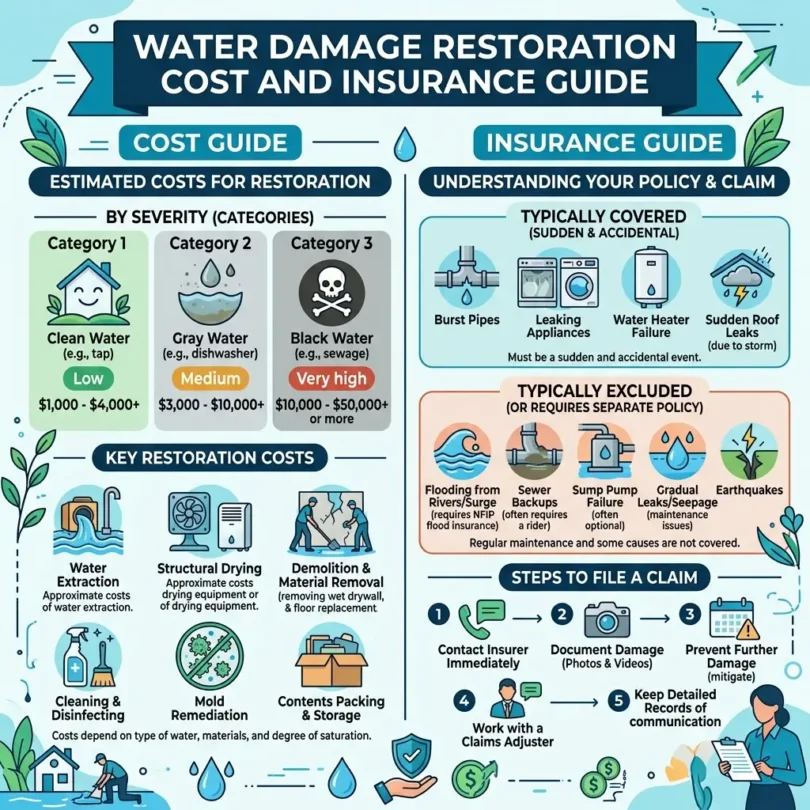
Most homeowners can expect water damage restoration to cost anywhere from a few hundred dollars for a very small clean-water issue to many thousands of dollars for major flooding, sewage contamination, or structural damage.
General cost ranges:
| Water Damage Project | Estimated Cost Range |
|---|---|
| Small clean-water leak | $500–$1,500 |
| Bathroom water overflow | $1,000–$4,000 |
| Kitchen appliance leak | $1,500–$6,000 |
| Basement water damage | $2,000–$10,000+ |
| Ceiling water damage | $500–$4,500 |
| Sewage backup cleanup | $3,000–$15,000+ |
| Major flood restoration | $10,000–$25,000+ |
| Full reconstruction after water damage | $15,000–$50,000+ |
These are general estimates. Your actual cost can be lower or higher depending on the size of the affected area, water type, materials damaged, and local labor rates.
HomeAdvisor lists drying and remediation costs around $4 to $6.50 per square foot for certain water damage cleanup, with additional repair costs for damaged materials such as hardwood, drywall, or plaster.
Water Damage Restoration Cost Per Square Foot
Water damage restoration is often estimated by square footage and water category.
A common planning range:
| Water Type | Estimated Restoration Cost |
|---|---|
| Clean water | $3–$4.50 per sq. ft. |
| Gray water | $4–$6.50 per sq. ft. |
| Black water | $7–$7.50+ per sq. ft. |
PuroClean’s 2026 guide lists clean water at $3 to $4 per square foot, gray water at $4 to $6.50 per square foot, and black water at $7 to $7.50 per square foot. Another 2026 pricing guide gives similar benchmarks, with Category 1 clean water around $3.50 to $4.50, Category 2 gray water around $4.50 to $6.50, and Category 3 black water around $7 to $7.50 per square foot for extraction, drying, and sanitization only.
Important point: per-square-foot restoration pricing may not include reconstruction. Replacing flooring, drywall, cabinets, trim, paint, insulation, or electrical components can add more cost.
Water Damage Categories Explained
Water damage is usually classified into three categories. The category affects cleanup difficulty, safety risk, and cost.
Category 1: Clean Water Damage
Category 1 water comes from a clean source. It may include:
- Broken supply line
- Overflowing sink with clean water
- Leaking faucet
- Water heater leak
- Refrigerator water line leak
- Rainwater from a small roof leak before contamination
Clean water is usually the least expensive to restore if handled quickly.
Estimated cost:
| Category 1 Damage | Estimated Cost |
|---|---|
| Small area | $500–$1,500 |
| Medium area | $1,500–$4,000 |
| Large area | $4,000–$8,000+ |
Clean water can become more serious if it sits too long. Water can absorb contaminants from building materials, flooring, dust, or bacteria. Quick drying matters.
Category 2: Gray Water Damage
Category 2 water contains some contamination and may cause illness if touched or ingested.
Sources may include:
- Washing machine overflow
- Dishwasher leak
- Toilet overflow without solid waste
- Sump pump failure
- Broken aquarium
- Some appliance discharge water
Gray water restoration costs more because cleaning and sanitizing are more important.
Estimated cost:
| Category 2 Damage | Estimated Cost |
|---|---|
| Small area | $1,000–$3,000 |
| Medium area | $3,000–$7,000 |
| Large area | $7,000–$15,000+ |
Gray water can become black water if left untreated, especially in warm environments.
Category 3: Black Water Damage
Category 3 water is heavily contaminated and can be dangerous. It may contain sewage, bacteria, chemicals, or other harmful substances.
Sources may include:
- Sewer backup
- Toilet overflow with feces
- Floodwater
- River or storm surge water
- Standing water with microbial growth
- Contaminated groundwater
Black water cleanup is the most expensive because it may require removal of porous materials, protective equipment, sanitization, and more intensive restoration.
Estimated cost:
| Category 3 Damage | Estimated Cost |
|---|---|
| Small area | $2,000–$5,000 |
| Medium area | $5,000–$15,000 |
| Large area | $15,000–$50,000+ |
Black water is not a DIY cleanup job. Homeowners should avoid contact and call professionals.
Water Damage Cost by Room
Water damage cost also depends on the room affected. Some rooms are more expensive because they contain cabinets, appliances, plumbing, flooring, fixtures, or electrical systems.
Bathroom Water Damage Cost
Bathrooms are common water damage locations because of toilets, sinks, tubs, showers, and plumbing lines.
Estimated cost:
| Bathroom Damage Level | Estimated Cost |
|---|---|
| Small leak | $500–$1,500 |
| Toilet overflow | $1,000–$5,000 |
| Shower or tub leak | $1,500–$7,000 |
| Severe bathroom water damage | $5,000–$15,000+ |
Costs rise if tile, subfloor, vanity, drywall, ceiling below, or plumbing must be repaired.
Kitchen Water Damage Cost
Kitchens can be expensive because of cabinets, appliances, flooring, and plumbing.
Estimated cost:
| Kitchen Damage Level | Estimated Cost |
|---|---|
| Small appliance leak | $800–$2,500 |
| Dishwasher or refrigerator line leak | $1,500–$6,000 |
| Cabinet and floor damage | $4,000–$15,000 |
| Major kitchen restoration | $10,000–$30,000+ |
Water under cabinets can be difficult to dry and may require cabinet removal.
Basement Water Damage Cost
Basements can flood from sump pump failure, heavy rain, sewer backup, foundation leaks, or plumbing issues.
Estimated cost:
| Basement Damage Level | Estimated Cost |
|---|---|
| Minor water intrusion | $1,000–$3,000 |
| Several inches of water | $3,000–$10,000 |
| Sewage backup | $5,000–$20,000+ |
| Finished basement restoration | $10,000–$50,000+ |
Finished basements cost more because drywall, flooring, insulation, furniture, and electrical components may be damaged.
Ceiling Water Damage Cost
Ceiling damage often comes from roof leaks, bathroom leaks, pipe leaks, or HVAC drain issues.
Estimated cost:
| Ceiling Damage Level | Estimated Cost |
|---|---|
| Small stain repair | $300–$800 |
| Drywall ceiling repair | $500–$2,500 |
| Ceiling collapse or major damage | $2,500–$8,000+ |
The visible stain may be only part of the problem. Water may also be inside insulation, joists, or walls.
What Affects Water Damage Restoration Cost?
1. Water Category
Clean water costs less than gray or black water. Sewage and floodwater require more safety measures.
2. Affected Square Footage
The larger the wet area, the more drying equipment, labor, and materials are needed.
3. Time Before Cleanup
Fast cleanup can reduce cost. Water left for 24 to 48 hours can increase mold risk and material damage.
4. Material Damage
Carpet, drywall, insulation, hardwood, cabinets, and subfloors all affect cost differently.
5. Mold Growth
Mold remediation can add significant cost if moisture is not controlled quickly.
6. Structural Damage
If framing, subfloor, joists, or load-bearing elements are damaged, repair costs rise.
7. Equipment Needed
Air movers, dehumidifiers, HEPA filtration, containment, and drying equipment may increase cost.
8. Labor Rates
Water restoration labor varies by city, contractor, emergency timing, and project complexity.
9. Emergency Service
After-hours emergency water extraction usually costs more.
10. Insurance Requirements
Insurance claims may require documentation, photos, moisture readings, estimates, and adjuster approval.
Does Homeowners Insurance Cover Water Damage?
Homeowners insurance may cover water damage if the cause is sudden and accidental. It usually does not cover gradual damage, poor maintenance, neglect, or outside flooding.
Nationwide explains that homeowners insurance may cover sudden and accidental water damage, such as burst pipes, overflowing toilets, or broken washer hoses. Progressive similarly says standard homeowners insurance may protect water damage if it is sudden, accidental, and comes from inside the home, but typically does not cover outside flooding or neglected repairs.
Usually Covered Examples
Coverage may apply if:
- A pipe bursts suddenly
- A water heater ruptures
- A washing machine hose breaks
- A toilet overflows suddenly
- An appliance leak causes sudden damage
- A roof leak from a covered storm damages interior areas
Usually Not Covered Examples
Coverage may be denied if:
- Damage happened slowly over time
- The homeowner ignored a known leak
- Water came from outside flooding
- Water entered through poor drainage
- Damage was caused by lack of maintenance
- Mold developed from a long-term leak
- Sewer backup occurred without special endorsement
- The policy excludes the specific cause
Allstate notes that most standard homeowners policies help cover water damage if the cause is sudden and accidental, but some situations are not covered.
Flood Damage vs Water Damage
This is very important.
Homeowners insurance usually does not cover outside flooding. Flood damage often requires separate flood insurance.
Flood damage may include water from:
- Heavy rain flooding
- Storm surge
- River overflow
- Lake overflow
- Flash flooding
- Groundwater entering the home
- Mudflow
Kiplinger’s 2026 hurricane insurance guide reminds homeowners that standard homeowners insurance typically covers wind damage but often excludes flood-related damage, which requires separate flood insurance such as the National Flood Insurance Program.
If you live in a flood-prone area, talk to your insurance agent about flood insurance before a storm happens.
Water Damage Insurance Claim Process
If you have water damage and believe insurance may cover it, follow these steps.
Step 1: Stop the Water Source
Turn off the water supply if safe. Shut off the main valve if needed.
Step 2: Protect Yourself
Do not enter standing water if electrical hazards or sewage contamination may exist.
Step 3: Document Everything
Take photos and videos before cleanup if safe. Document the source, affected rooms, damaged items, and visible water.
Step 4: Prevent Further Damage
Insurance policies often require homeowners to prevent additional damage. This may include emergency extraction, drying, tarping, or temporary repairs.
Step 5: Call Your Insurance Company
Report the claim quickly and ask what documentation is needed.
Step 6: Call a Restoration Company
A professional restoration contractor can extract water, dry the home, and provide moisture documentation.
Step 7: Keep Receipts
Save receipts for emergency repairs, hotel stays, equipment rental, and temporary work.
Step 8: Meet the Adjuster
The insurance adjuster may inspect the damage and estimate coverage.
Step 9: Review the Estimate
Compare the insurance estimate with contractor estimates. Ask questions if something is missing.
Step 10: Complete Repairs
Once approved, restoration and reconstruction can continue according to the claim process.
Kiplinger recommends documenting damage with photos, making temporary repairs to prevent further loss, and keeping receipts when handling hurricane-related insurance claims.
Mold Risk After Water Damage
Mold is one of the biggest risks after water damage. Mold can begin growing when moisture remains in drywall, carpet, insulation, wood, or hidden cavities.
Mold risk increases when:
- Water sits too long
- Humidity stays high
- Drywall remains wet
- Carpet padding is soaked
- Airflow is poor
- Warm temperatures exist
- Hidden moisture is not detected
- Cleanup is incomplete
Mold remediation can add cost because contaminated materials may need removal, containment, air filtration, cleaning, and post-remediation verification.
The best way to reduce mold risk is to dry the affected area quickly and properly.
DIY Water Cleanup vs Professional Restoration
Small clean-water spills can sometimes be handled by homeowners. But many water damage events need professional restoration.
DIY May Be Reasonable If:
- The water is clean
- The affected area is small
- Water was removed quickly
- No drywall, insulation, or subfloor is wet
- No electrical hazard exists
- No mold is present
Call Professionals If:
- Water covers a large area
- Water reached walls or ceilings
- Carpet padding is soaked
- Hardwood floors are affected
- Sewage is involved
- Floodwater is involved
- Mold is visible
- The source is unknown
- Electrical systems may be wet
- Insurance documentation is needed
Professional equipment can detect and dry hidden moisture that fans alone may not remove.
How to Reduce Water Damage Restoration Cost
1. Act Quickly
The faster you remove water and dry the area, the lower the chance of expensive damage.
2. Stop the Leak
Shut off water at the source. If you cannot stop it, call an emergency plumber.
3. Remove Standing Water
If safe, remove small amounts of clean water with towels, wet vacs, or mops.
4. Move Valuables
Move furniture, electronics, rugs, and important documents away from wet areas.
5. Call Insurance Early
Ask what is covered and whether emergency mitigation is approved.
6. Document Before Removing Materials
Take photos and videos for insurance.
7. Use Professional Drying for Larger Damage
Improper drying can lead to mold and higher costs later.
8. Fix the Root Cause
Do not restore walls or floors until the leak or water source is fixed.
9. Keep Receipts
Insurance may need proof of emergency expenses.
10. Maintain Plumbing and Appliances
Prevention is cheaper than restoration.
Common Water Damage Mistakes
Mistake 1: Waiting Too Long
Delays increase drying cost, material damage, and mold risk.
Mistake 2: Assuming Insurance Covers Everything
Insurance depends on the cause, policy terms, exclusions, and maintenance history.
Mistake 3: Ignoring Hidden Moisture
Walls, subfloors, and cabinets can stay wet even after visible water is gone.
Mistake 4: Using Only Household Fans
Fans can help, but professional dehumidifiers and moisture meters may be needed.
Mistake 5: Cleaning Sewage Yourself
Sewage is dangerous and should be handled by professionals.
Mistake 6: Throwing Away Damaged Items Too Soon
Take photos and document items before disposal if insurance is involved.
Mistake 7: Not Fixing the Leak
Restoration without fixing the source can lead to repeated damage.
Mistake 8: Not Reading the Insurance Policy
Know deductibles, exclusions, limits, and coverage type.
Questions to Ask a Water Damage Restoration Company
Before hiring a restoration company, ask:
- Are you licensed and insured?
- Do you offer emergency service?
- Do you handle water extraction?
- Do you use moisture meters?
- Do you provide drying logs?
- Do you work with insurance claims?
- What category of water is involved?
- What materials need removal?
- How long will drying take?
- Will mold testing or remediation be needed?
- What equipment will be used?
- What is included in the estimate?
- Do you provide reconstruction?
- Are repairs billed separately from mitigation?
- Can you provide photos and documentation?
A good company should explain the mitigation plan clearly.
Final Verdict: How Much Should You Budget for Water Damage Restoration?
Most homeowners should budget at least a few thousand dollars for water damage restoration if the damage affects more than a small area. A typical restoration project often falls around $1,383 to $6,370, with a national average near $3,860, but large flood, sewage, mold, or reconstruction projects can cost much more.
For square-foot estimates, clean water damage may cost around $3 to $4.50 per square foot, gray water around $4 to $6.50 per square foot, and black water around $7 to $7.50+ per square foot, before major reconstruction.
The smartest step is to act fast. Stop the water source, document the damage, contact insurance, and begin proper drying quickly. Water damage gets more expensive when it is ignored.
A fast response can protect your home, reduce mold risk, and improve your chance of a smoother insurance claim.
FAQs About Water Damage Restoration Cost
How much does water damage restoration cost?
Water damage restoration commonly costs around $1,383 to $6,370, with a national average near $3,860 in 2026. The final cost depends on water type, square footage, severity, materials, and repairs.
How much does water damage cost per square foot?
Clean water damage may cost around $3 to $4.50 per square foot, gray water around $4 to $6.50 per square foot, and black water around $7 to $7.50+ per square foot for extraction, drying, and sanitization.
Does homeowners insurance cover water damage?
Homeowners insurance may cover water damage if it is sudden and accidental, such as a burst pipe or broken washer hose. It usually does not cover flooding, neglect, poor maintenance, or gradual leaks.
Does homeowners insurance cover flood damage?
Usually no. Standard homeowners insurance typically does not cover outside flooding. Flood insurance is usually separate.
What is the most expensive type of water damage?
Black water damage is usually the most expensive because it may involve sewage, floodwater, contamination, material removal, sanitization, and health risks.
Can I clean water damage myself?
Small clean-water spills may be cleaned by homeowners if handled quickly. Large water damage, sewage, floodwater, wet drywall, soaked carpet padding, mold, or electrical risk should be handled by professionals.
How long does water damage restoration take?
Drying may take 2 to 5 days for many projects, but severe damage or reconstruction can take weeks. The timeline depends on water amount, materials affected, humidity, and repair scope.
How quickly does mold grow after water damage?
Mold risk increases when materials stay wet. Fast drying within the first 24 to 48 hours can reduce mold risk, but hidden moisture can still cause problems.
What should I do first after water damage?
Stop the water source if safe, avoid electrical hazards, document damage with photos, call your insurance company, and contact a restoration company for extraction and drying.
What is the difference between mitigation and restoration?
Mitigation stops further damage by removing water, drying, and cleaning. Restoration repairs or rebuilds damaged materials such as drywall, flooring, cabinets, and paint.